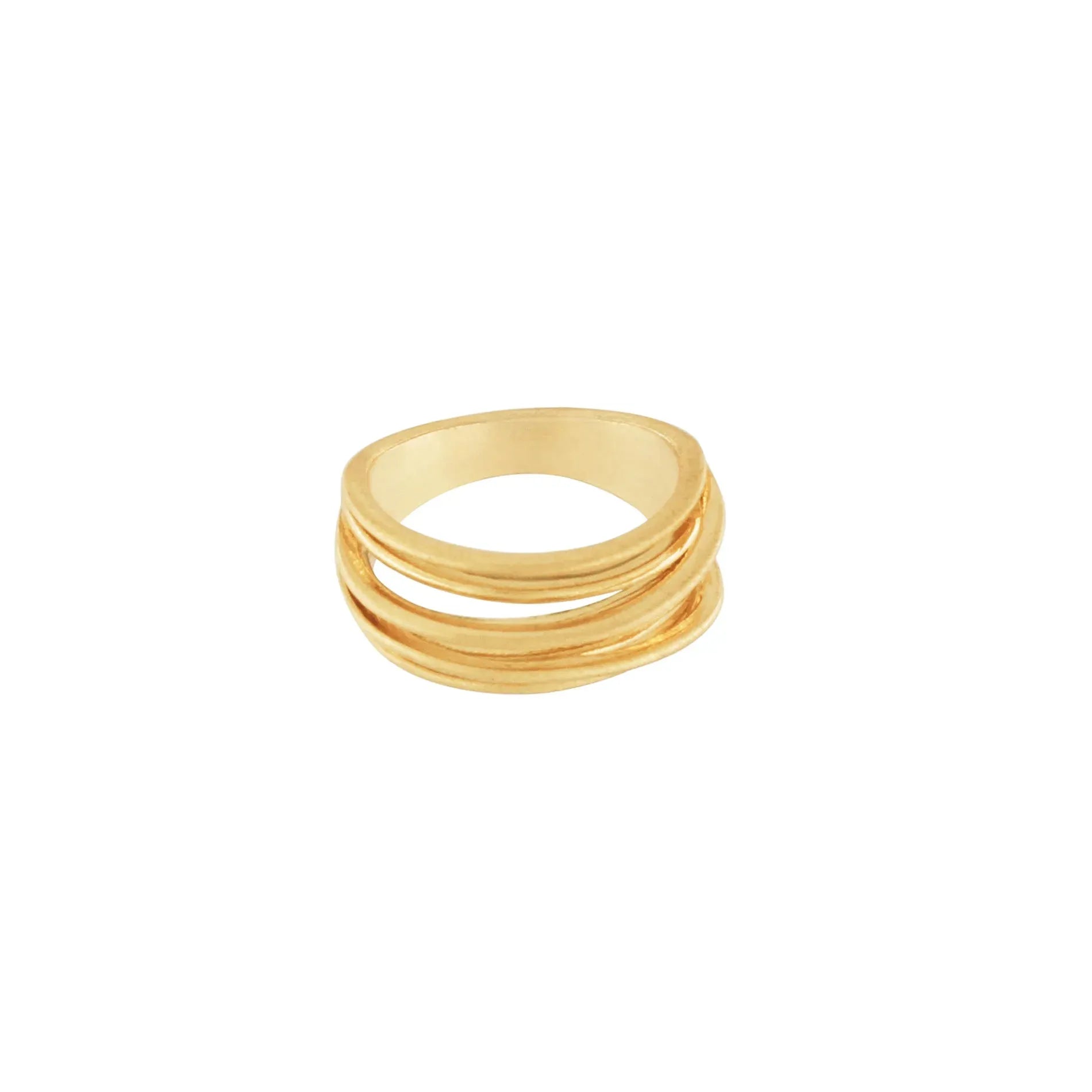
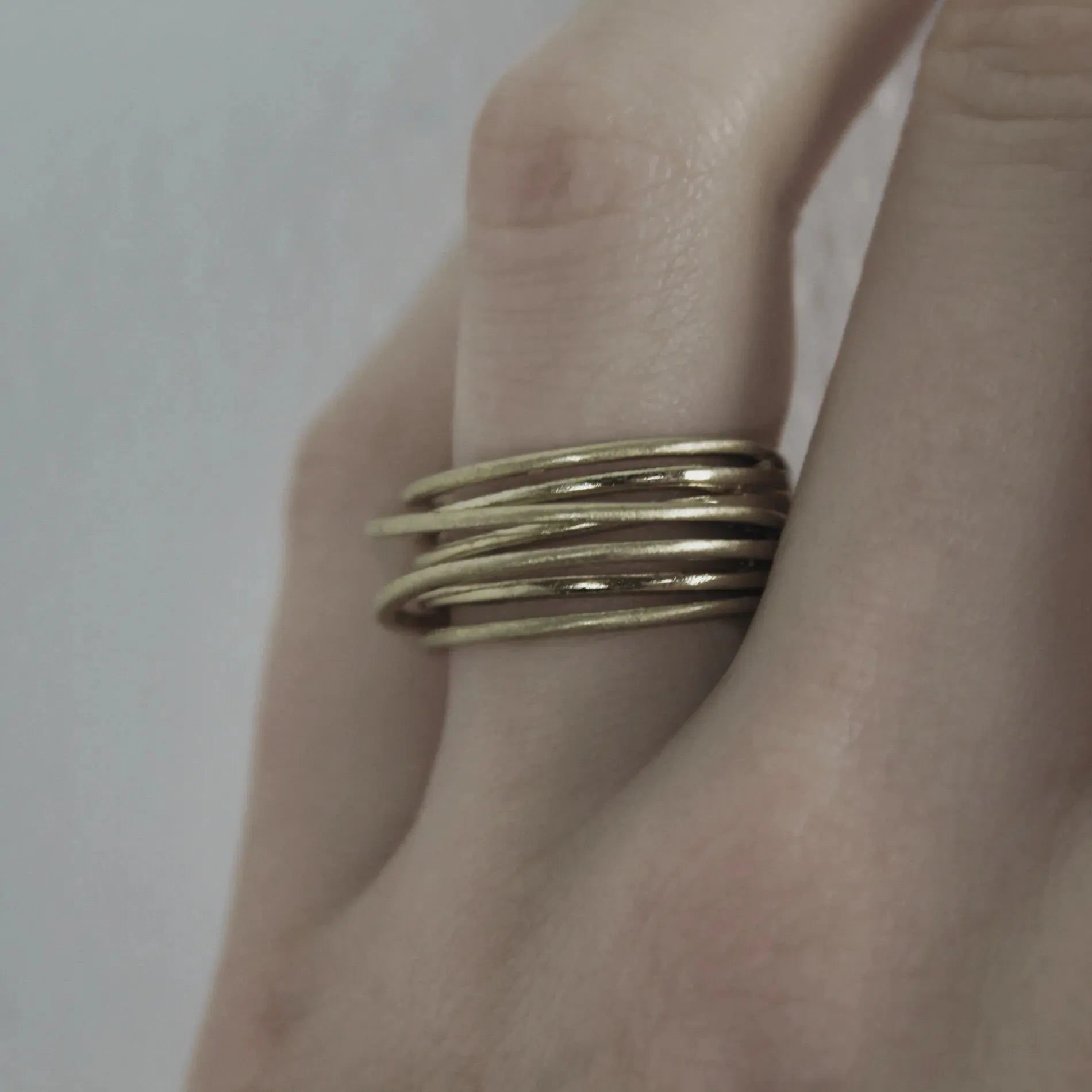
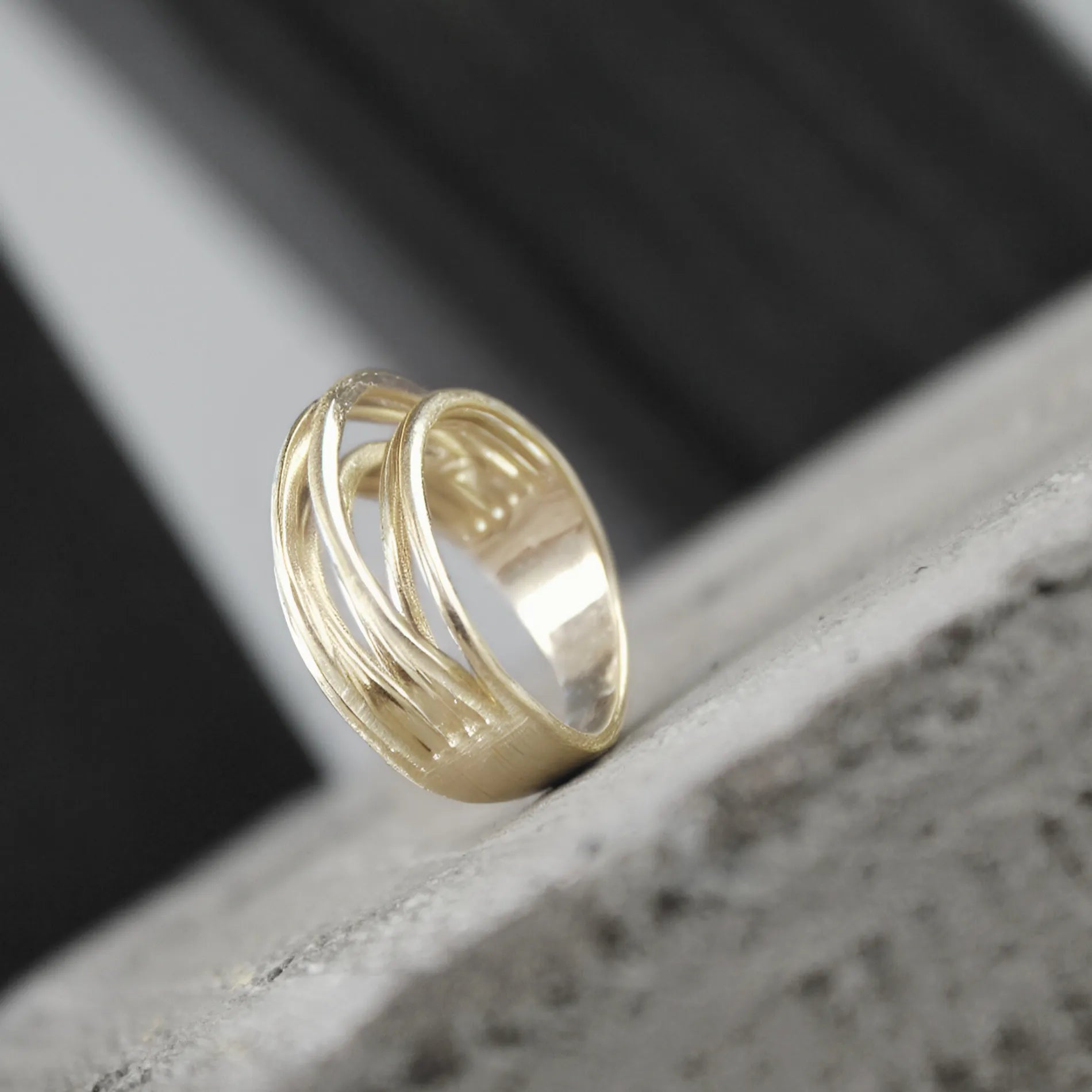
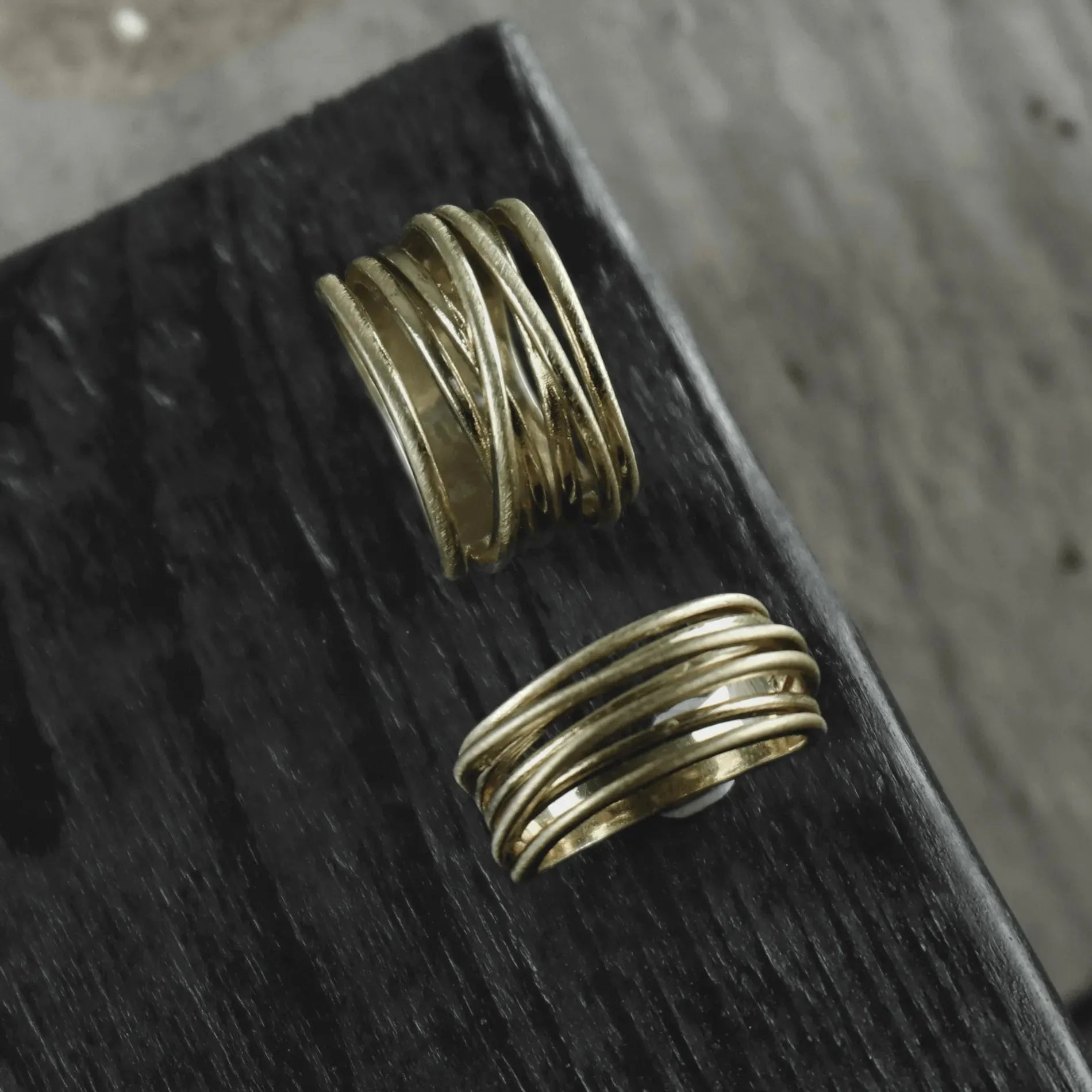



To clean gold plated jewellery, soak it briefly in lukewarm water with a drop of mild soap, wipe it with a soft cloth and dry it straight away. Avoid toothpaste, baking soda, silver polish and ultrasonic cleaners, which wear the gold layer down.
How much care you need depends on what sits under the gold. Here is the method, and why jewellery from DANSK Copenhagen needs less of it.
How do you clean gold plated jewellery at home?
- Fill a small bowl with lukewarm water and add a drop of mild hand or dish soap.
- Leave your jewellery in the water for one to two minutes.
- Wipe gently with a soft microfibre cloth. Use a soft baby toothbrush only around clasps or stone settings.
- Rinse in clean water.
- Dry immediately with a soft cloth, then buff lightly to bring back the shine.
That is all most gold jewellery needs. Harder scrubbing does not clean better; it only adds friction.
What should you never use on gold plated jewellery?
- Toothpaste or baking soda pastes, which are abrasive.
- Silver polish or silver polishing cloths.
- Jewellery dips and alcohol-heavy cleaners.
- Ultrasonic cleaners, which are too intense for plated finishes.
- Very hot water, which can loosen the glue around stones and pearls.
Does waterproof gold jewellery need the same care?
Less of it. Standard gold plating is a thin layer, often over brass or silver, and it can rub off with water, sweat and friction.
At DANSK Copenhagen, gold jewellery is 18K ION plated onto 316L stainless steel. The gold bonds directly to the steel for a harder, more wear-resistant finish than standard plating.
That is why our waterproof jewellery can stay on in the shower, at the gym and in the sea. After chlorine or salt water, a quick rinse in fresh water keeps the finish at its best. Browse our waterproof gold jewellery.
Our silver jewellery needs even less: the silver tone is the natural colour of the steel, solid to the core, so there is no layer to wear off.
Why does gold plated jewellery lose its shine?
Usually it is residue, not wear. Lotion, sunscreen, perfume and body oils leave a film that makes gold look flat. A gentle clean removes it.
If a ring looks lighter on the underside, that is friction wear. Rings and bracelets meet desks, bags and hands all day, so they show it first. Read more in how long does gold plating last.
How often should you clean gold plated jewellery?
Wipe your jewellery with a dry, soft cloth after wearing it. That removes oils before they build up.
A deeper clean is only needed when your jewellery looks dull or feels sticky. For many people, that is every few weeks.
How should you store gold jewellery?
Keep each design in its own soft pouch or compartment, so they do not scratch each other. Store jewellery only when it is completely dry.
A drawer or lined jewellery box works better than a steamy bathroom shelf.
Everyday habits that keep the finish fresh
- Put jewellery on last, after perfume, hairspray and lotion.
- Rinse after the pool or the sea, then pat dry.
- Rotate your favourites to spread the wear.
For a full routine for steel jewellery, see our guide to waterproof jewellery care.
Frequently asked questions
Can you shower with gold plated jewellery?
It depends on the base metal. Standard plating on brass wears faster in water. 18K ION plating on 316L steel, like ours, is waterproof and made for daily wear, including showers.
Can you clean gold plated jewellery with toothpaste?
No. Toothpaste is abrasive and can scratch or remove the gold layer. Use lukewarm water, mild soap and a soft cloth instead.
Does ION plated gold tarnish?
ION plating bonds to the steel and resists tarnishing far better than standard plating. A gentle clean now and then keeps it bright.
No stockist near you yet? Get in touch and we'll do our best to find one in your area.