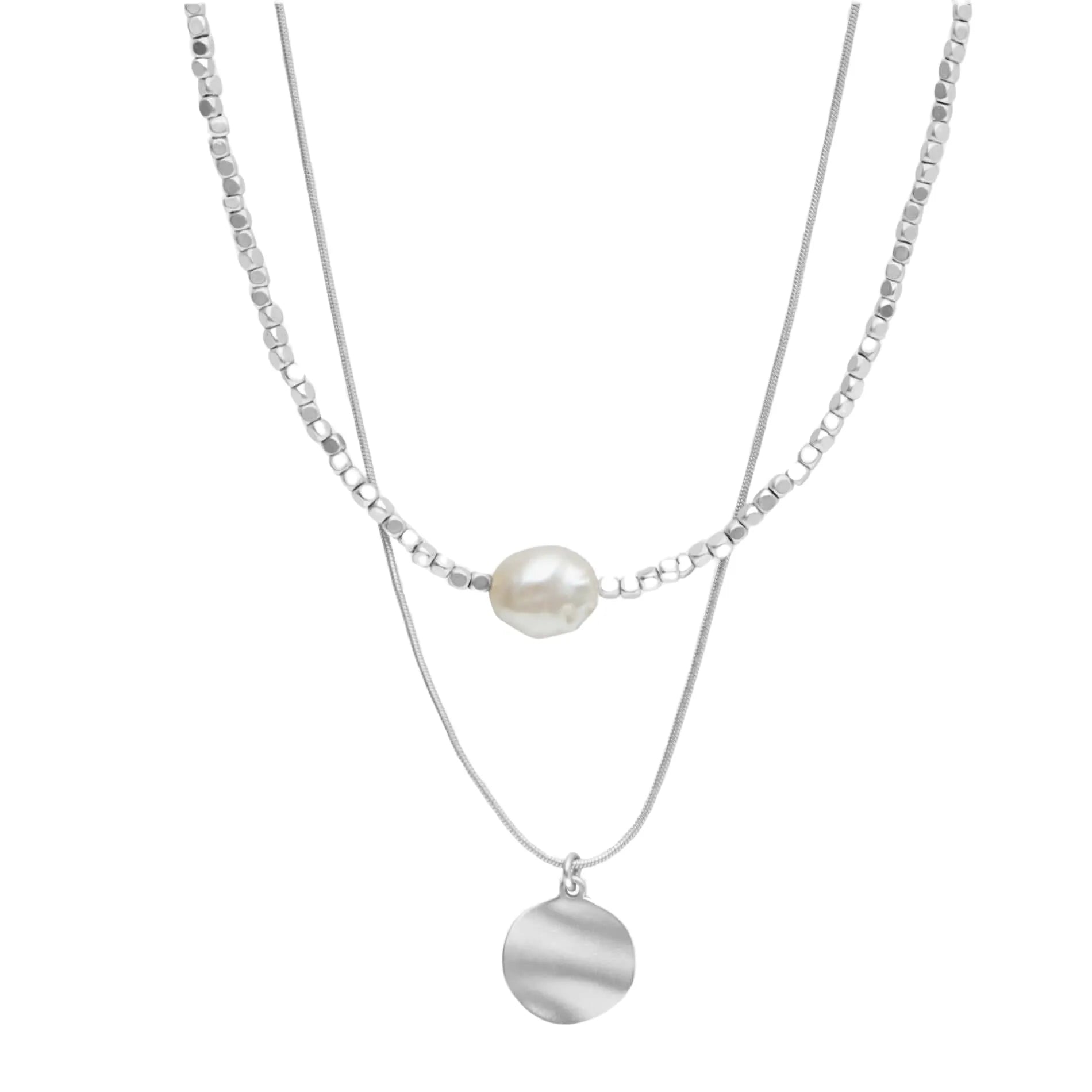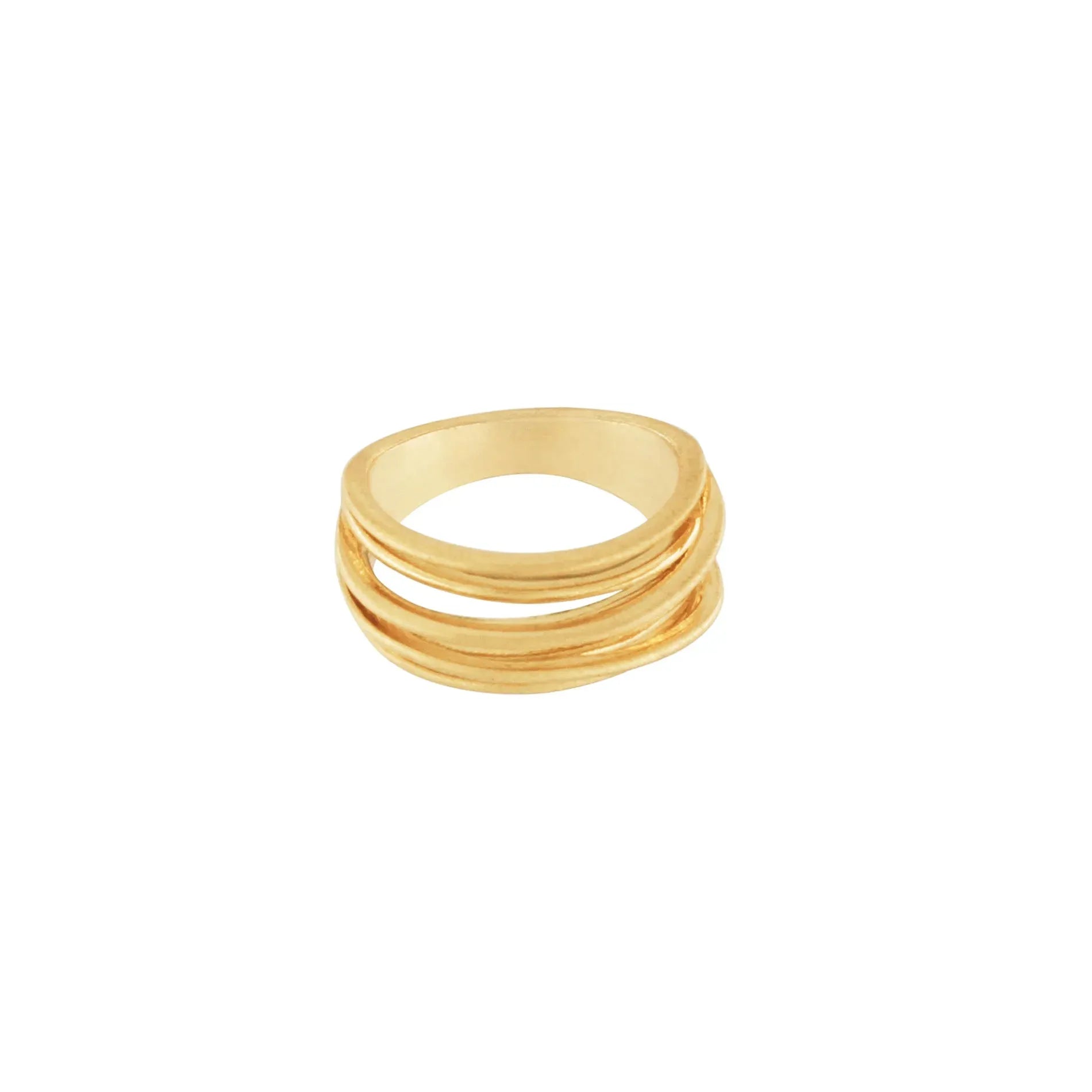
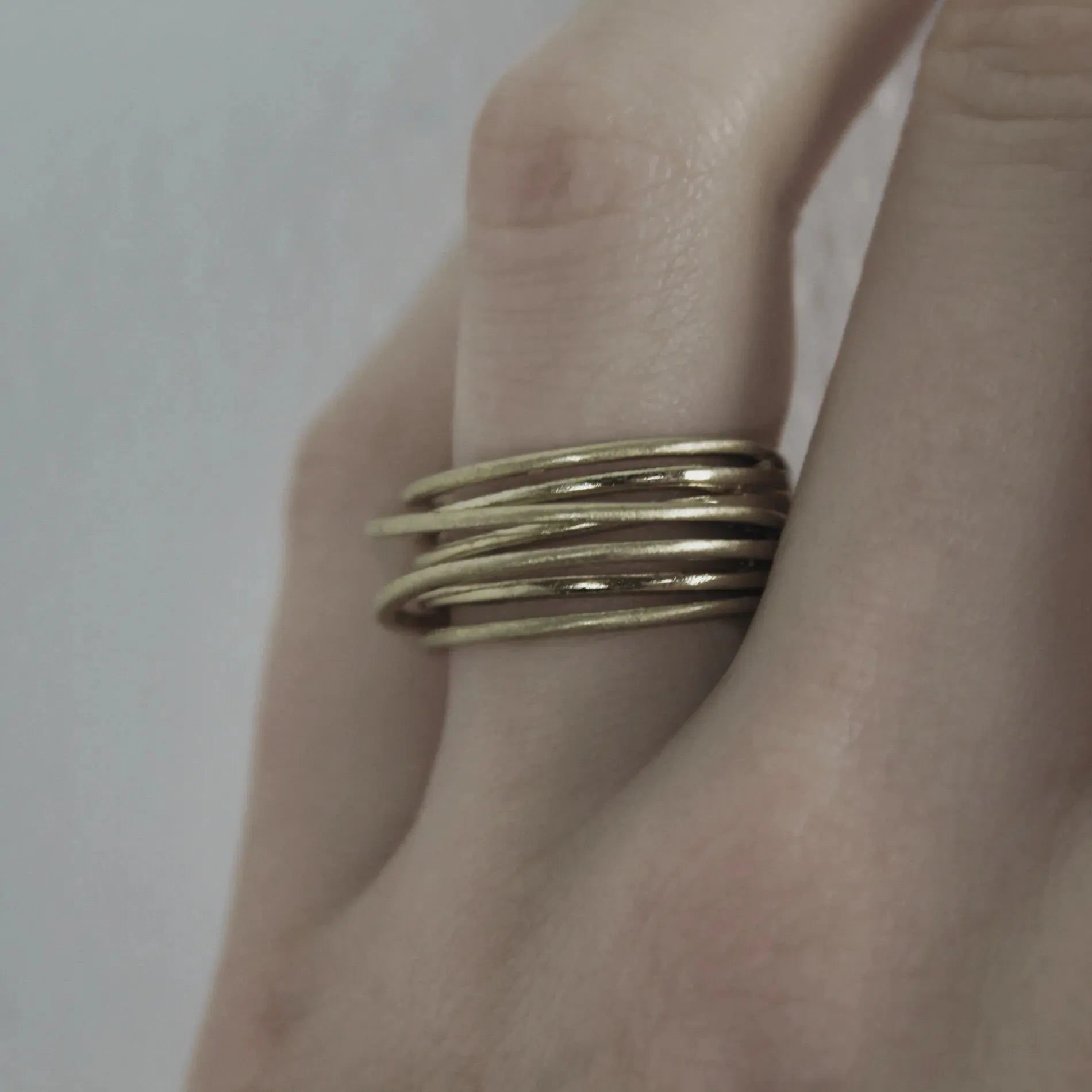
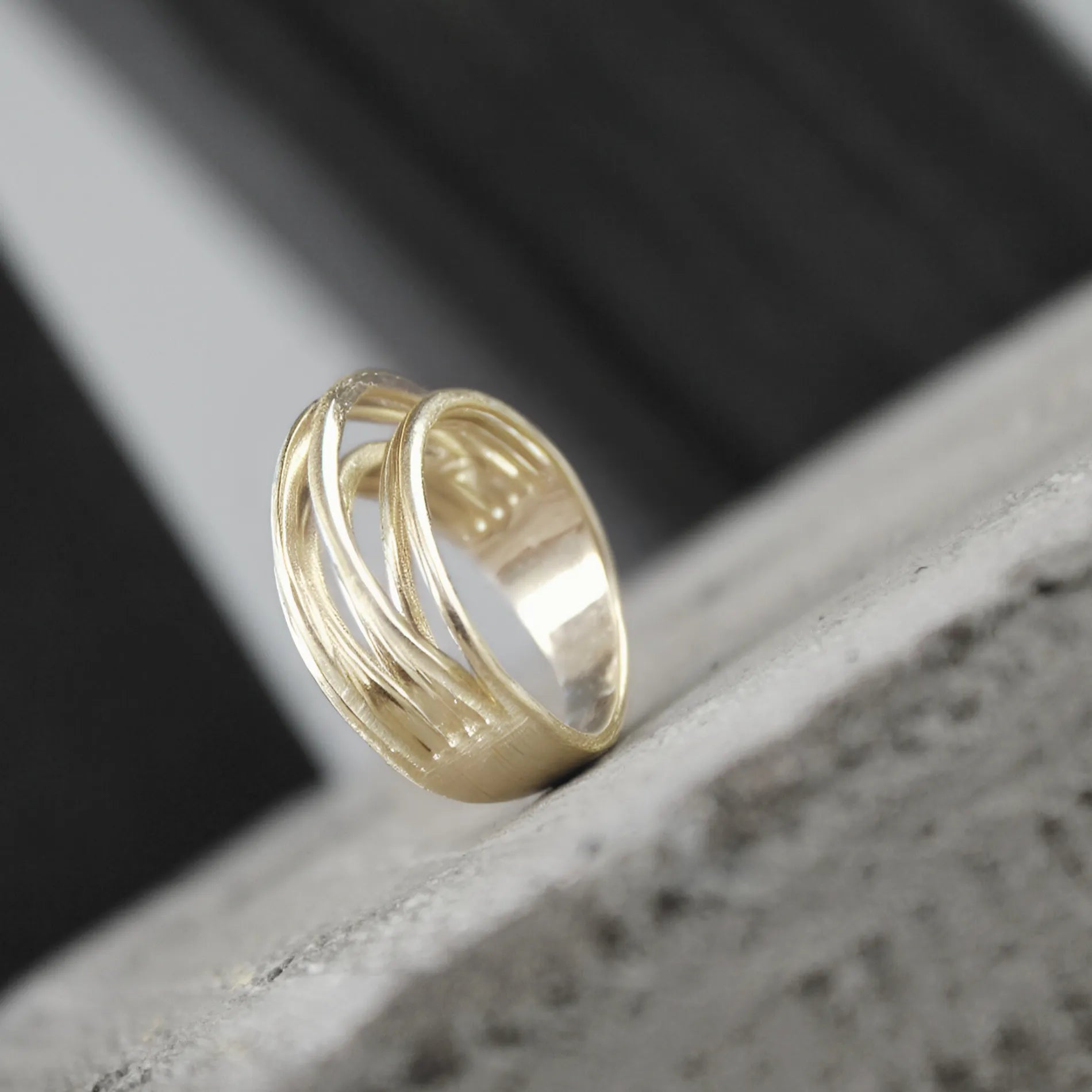
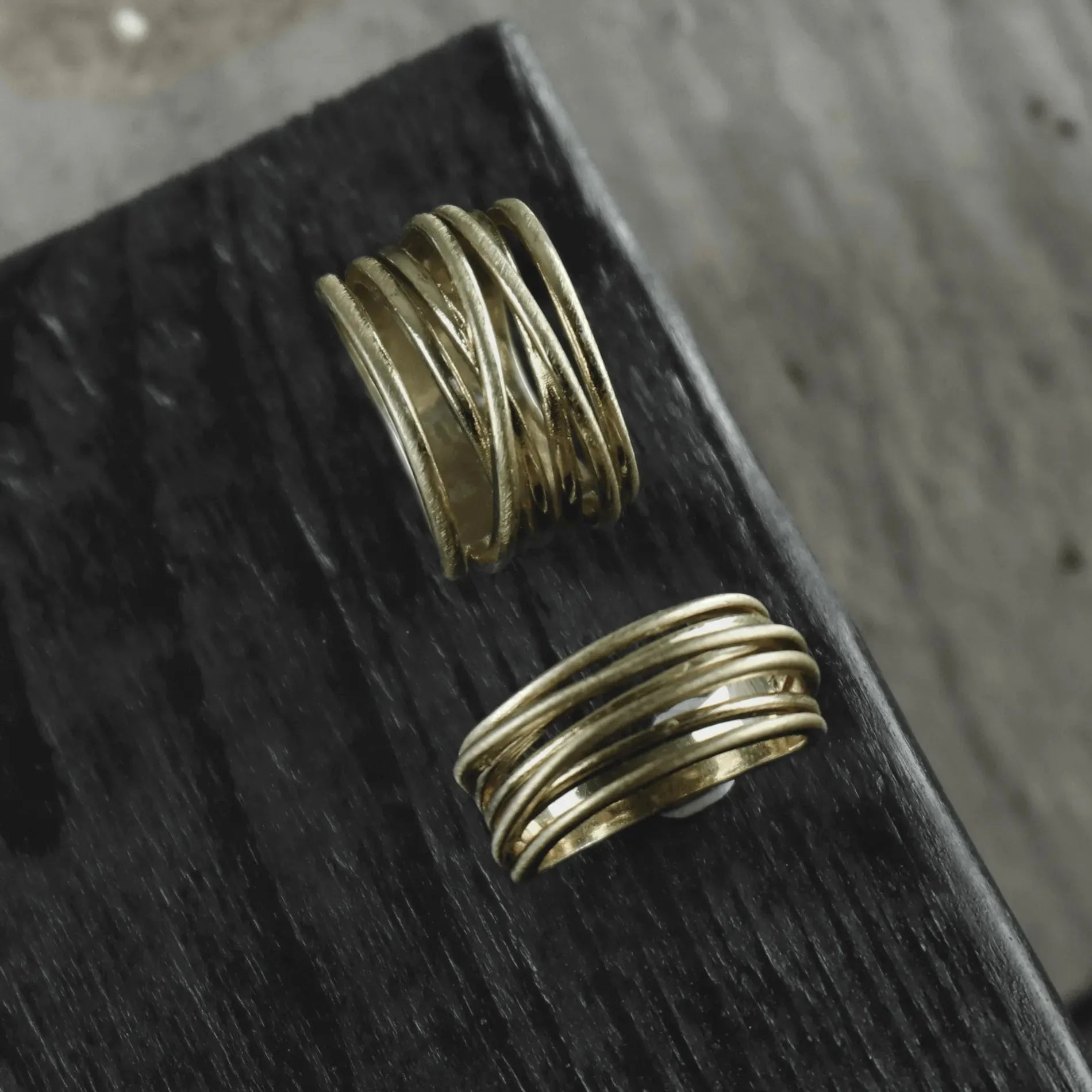
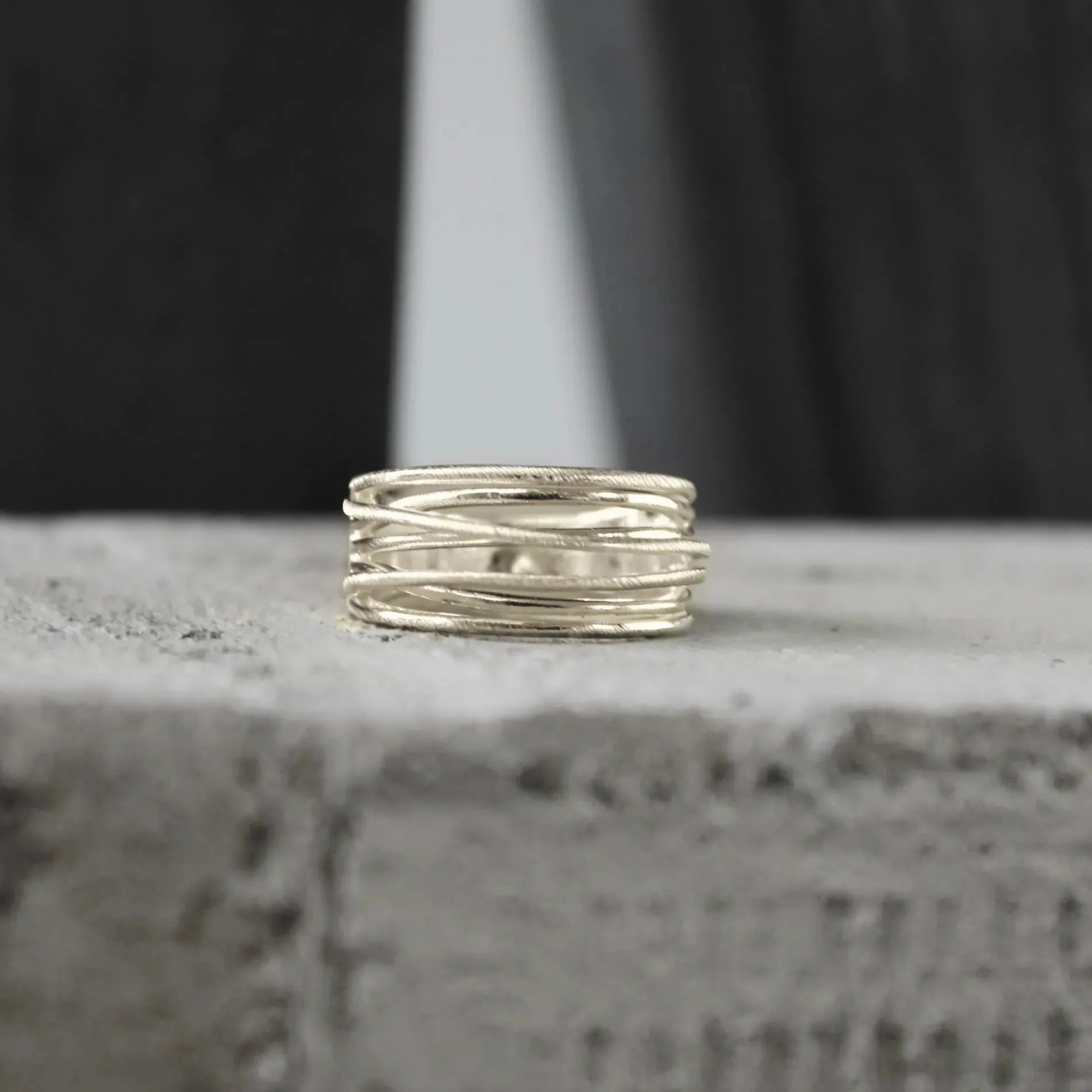
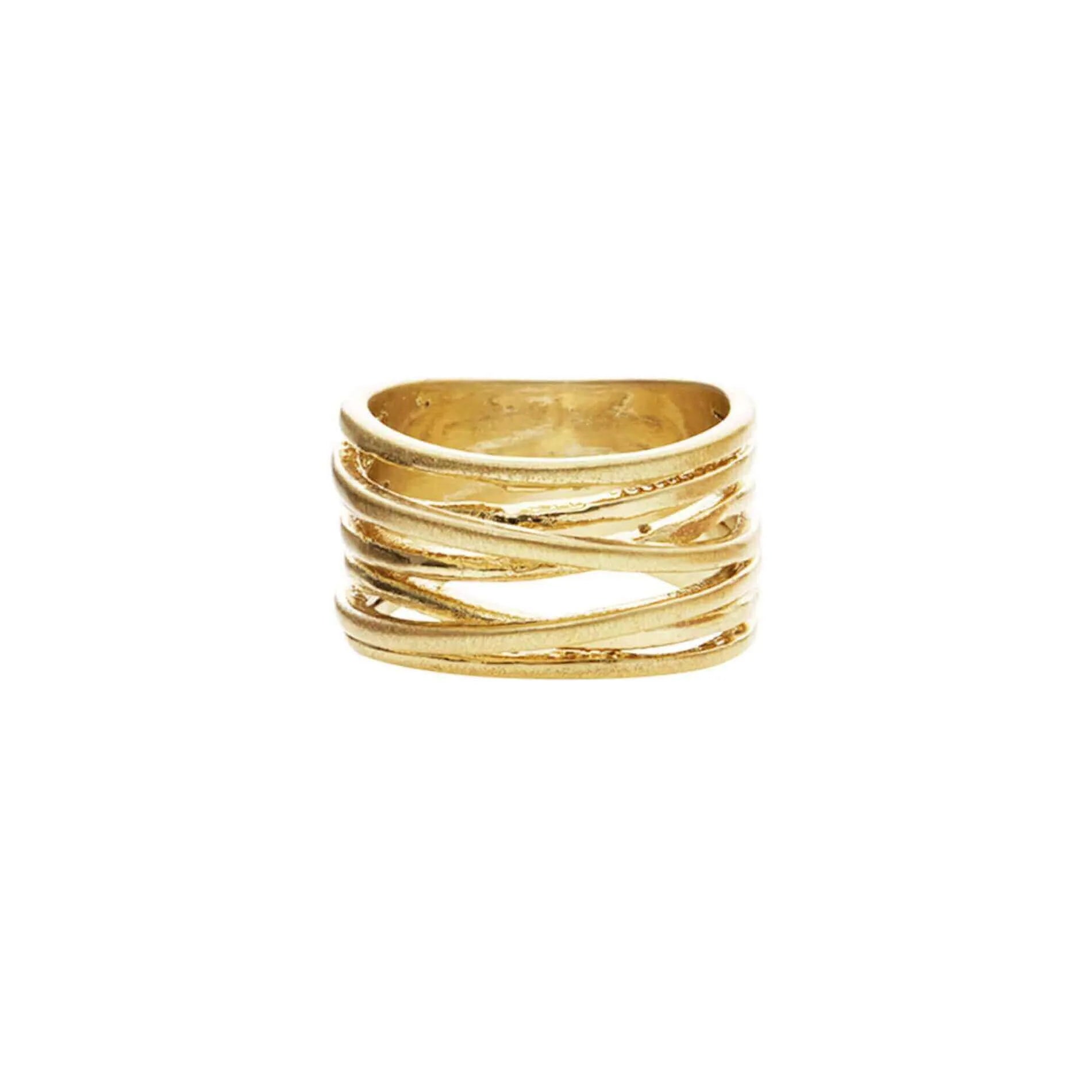
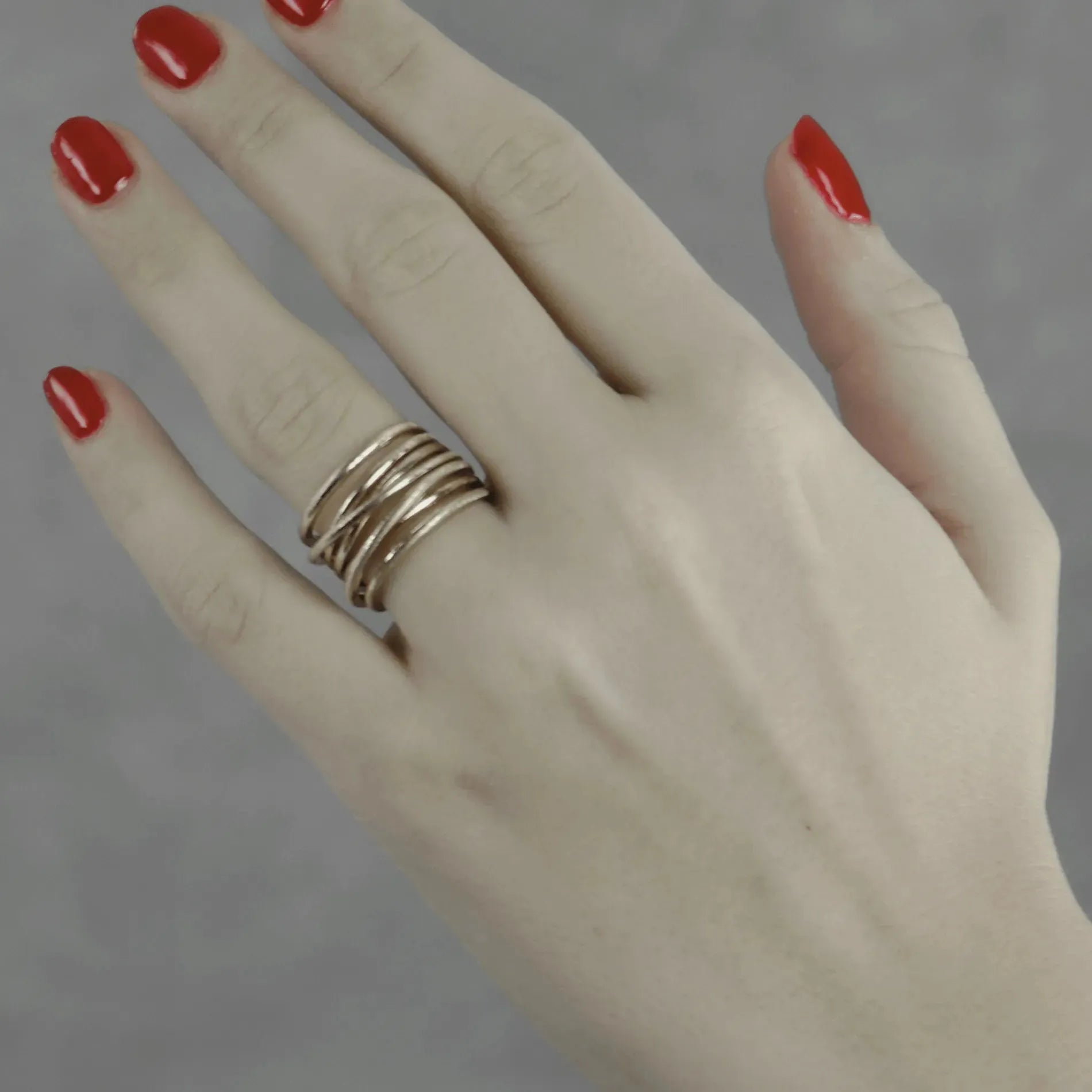
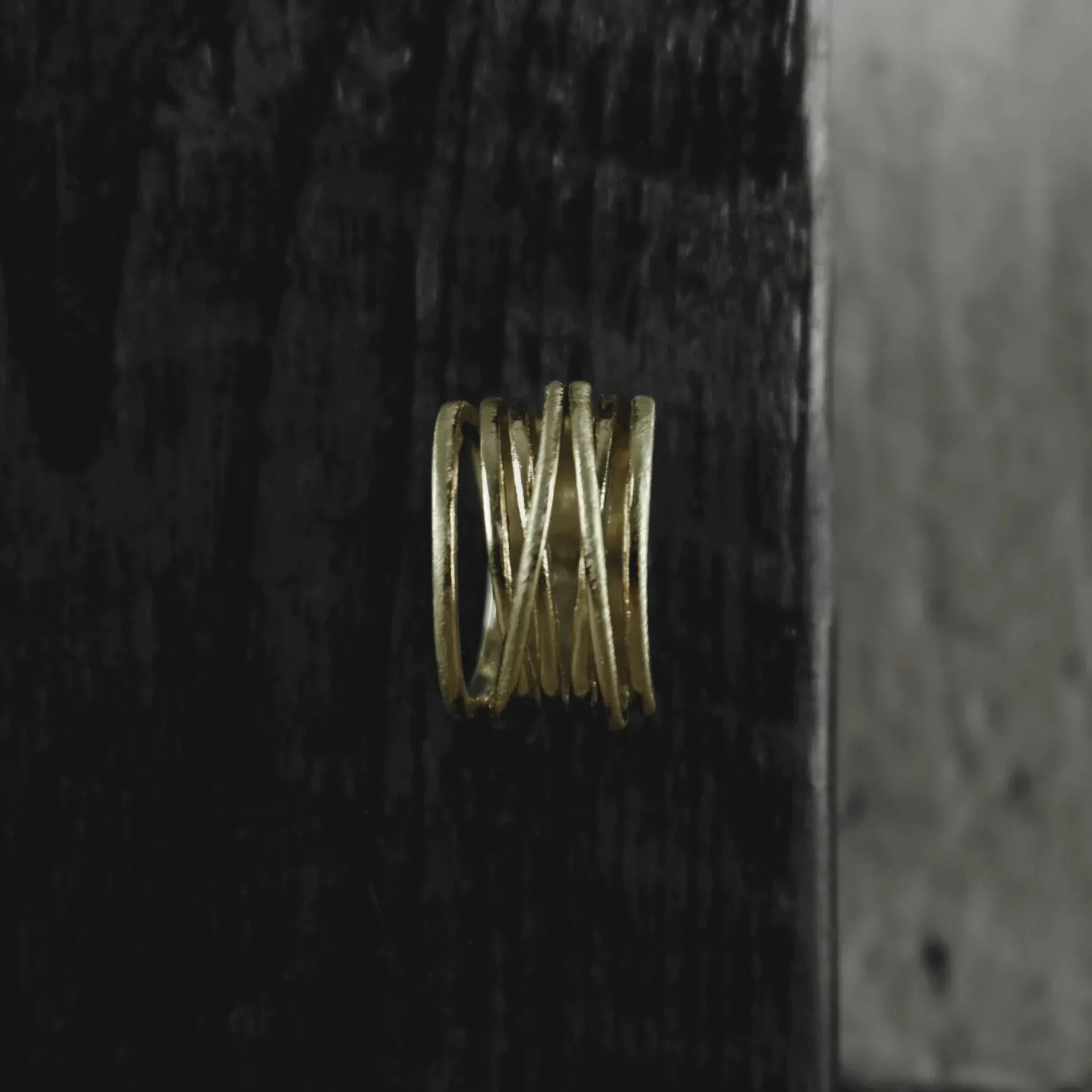
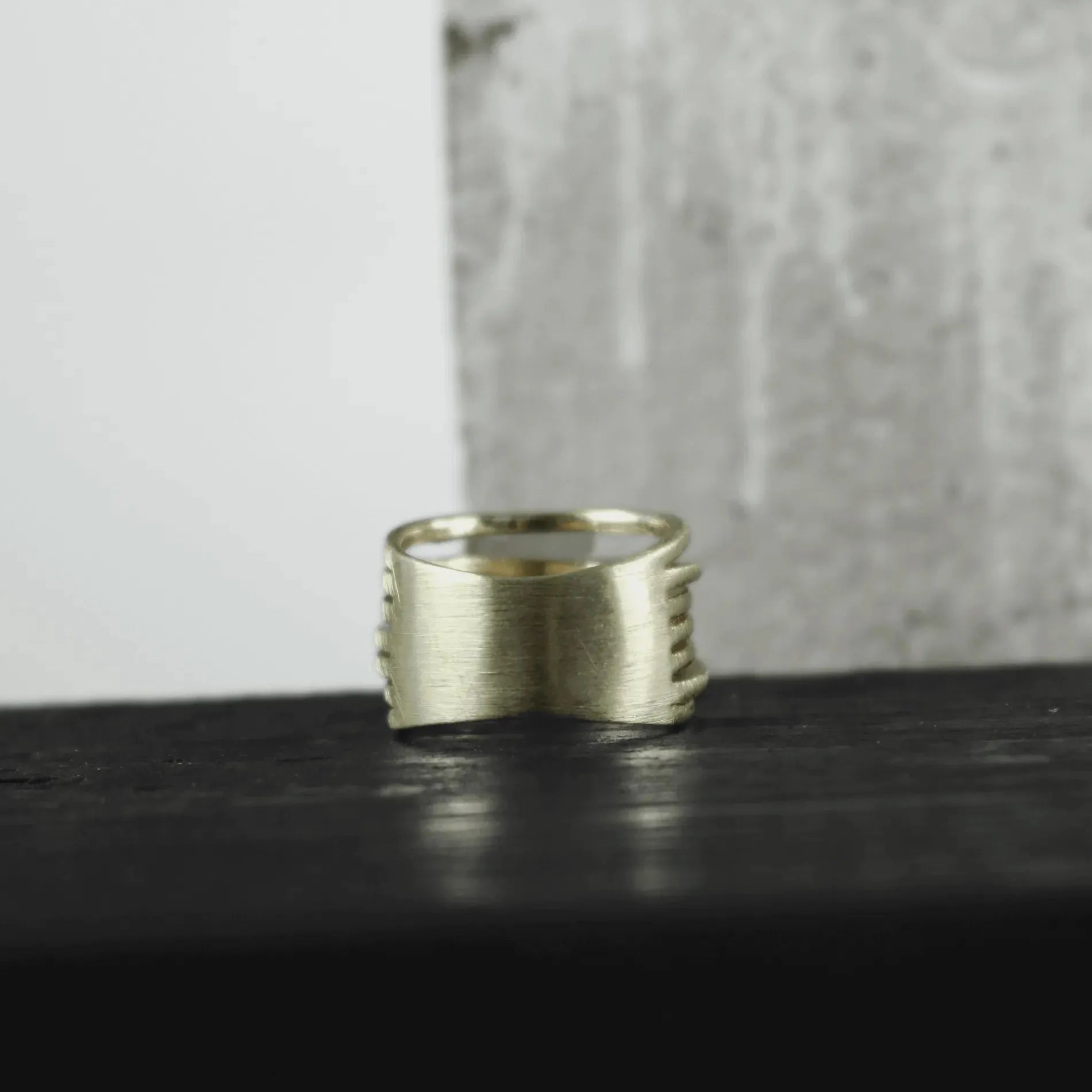
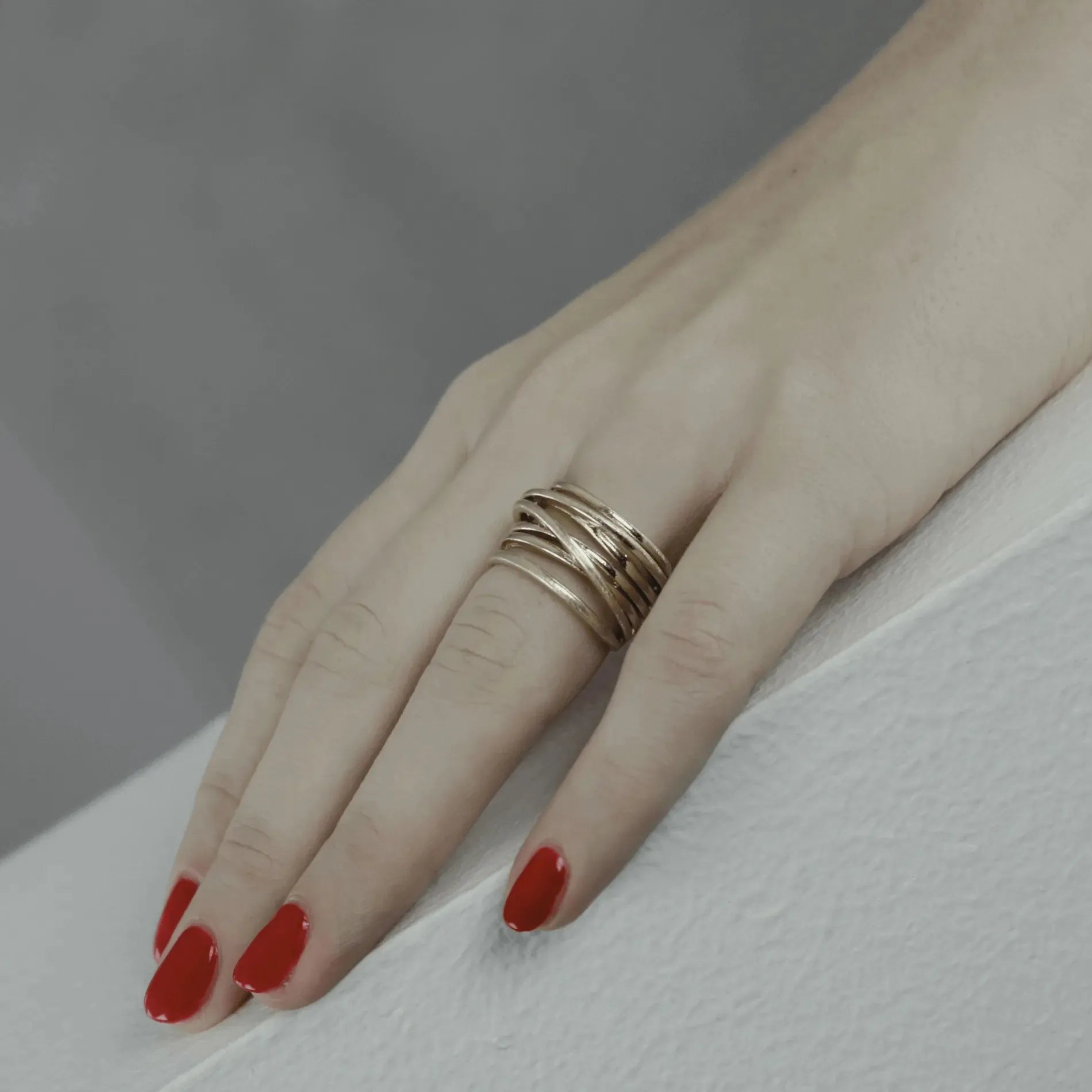



Brass is a metal alloy made mainly of copper and zinc. It is widely used in fashion jewellery because it has a warm, golden tone, is easy to shape and keeps prices low. It is less suited to water and sensitive skin than stainless steel.
DANSK Copenhagen has designed jewellery in Copenhagen since 1971, in both brass and steel. Here is what you should know about brass, and why 316L stainless steel is now the foundation of our collection.
What is brass made of?
Brass is copper mixed with zinc. More copper gives a warmer, redder tone; more zinc gives a paler, yellower one.
In jewellery, brass is usually plated with gold or silver for colour. The plating gives the look, while the brass gives the shape and weight.
What are the benefits of brass jewellery?
- Warm colour that suits gold-tone designs.
- Easy to shape, so detailed and sculptural designs are possible.
- Affordable, which makes it popular for trend-led fashion jewellery.
What are the downsides of brass jewellery?
- It tarnishes. Brass reacts with air and moisture and slowly darkens or develops a patina.
- It can mark the skin. The copper in brass can leave a green tint, especially with sweat or humidity.
- The plating wears. Once the top layer wears thin, the brass underneath comes into contact with your skin.
- It is not waterproof. Water, chlorine and salt speed up tarnishing.
Is brass jewellery suitable for sensitive skin?
Some people wear brass without any problem, especially for short periods. Others find that copper alloys irritate their skin.
If you have sensitive ears or skin, hypoallergenic jewellery in 316L stainless steel is the safer choice.
How should you care for brass jewellery?
Keep brass dry and take it off before showering, swimming or exercising. Wipe it with a soft cloth after wearing and store it in a closed pouch, away from humidity.
Brass vs 316L stainless steel
| Brass | 316L stainless steel | |
|---|---|---|
| Made of | Copper and zinc | A corrosion-resistant stainless steel alloy |
| Water | Avoid | Waterproof |
| Tarnish | Tarnishes over time | Resists tarnishing |
| Sensitive skin | Can irritate | Hypoallergenic |
| Daily wear | Occasional | Made for every day |
For a closer look at earrings, read surgical steel vs brass earrings.
Why DANSK Copenhagen designs in 316L steel
We want jewellery you can put on in the morning and forget about until evening, through showers, workouts and rain. That is what 316L steel makes possible.
Going forward, 316L stainless steel is the foundation of the DANSK Copenhagen collection. Our silver tone is the natural colour of the steel, solid to the core. Our gold is 18K ION plated for lasting colour. Every design is waterproof and hypoallergenic.
Explore our waterproof jewellery or start with our ESSENTIALS.
Frequently asked questions
Is brass real gold?
No. Brass is a copper and zinc alloy. It can look golden on its own or be plated with gold for colour.
Does brass turn your skin green?
It can. Copper in brass reacts with sweat and moisture and may leave a harmless green mark on the skin.
Is brass jewellery waterproof?
No. Water speeds up tarnishing on brass. For jewellery you can wear in water, choose 316L stainless steel.
No stockist near you yet? Get in touch and we'll do our best to find one in your area.